When to Prune Trees in Ontario: A Season-by-Season Guide
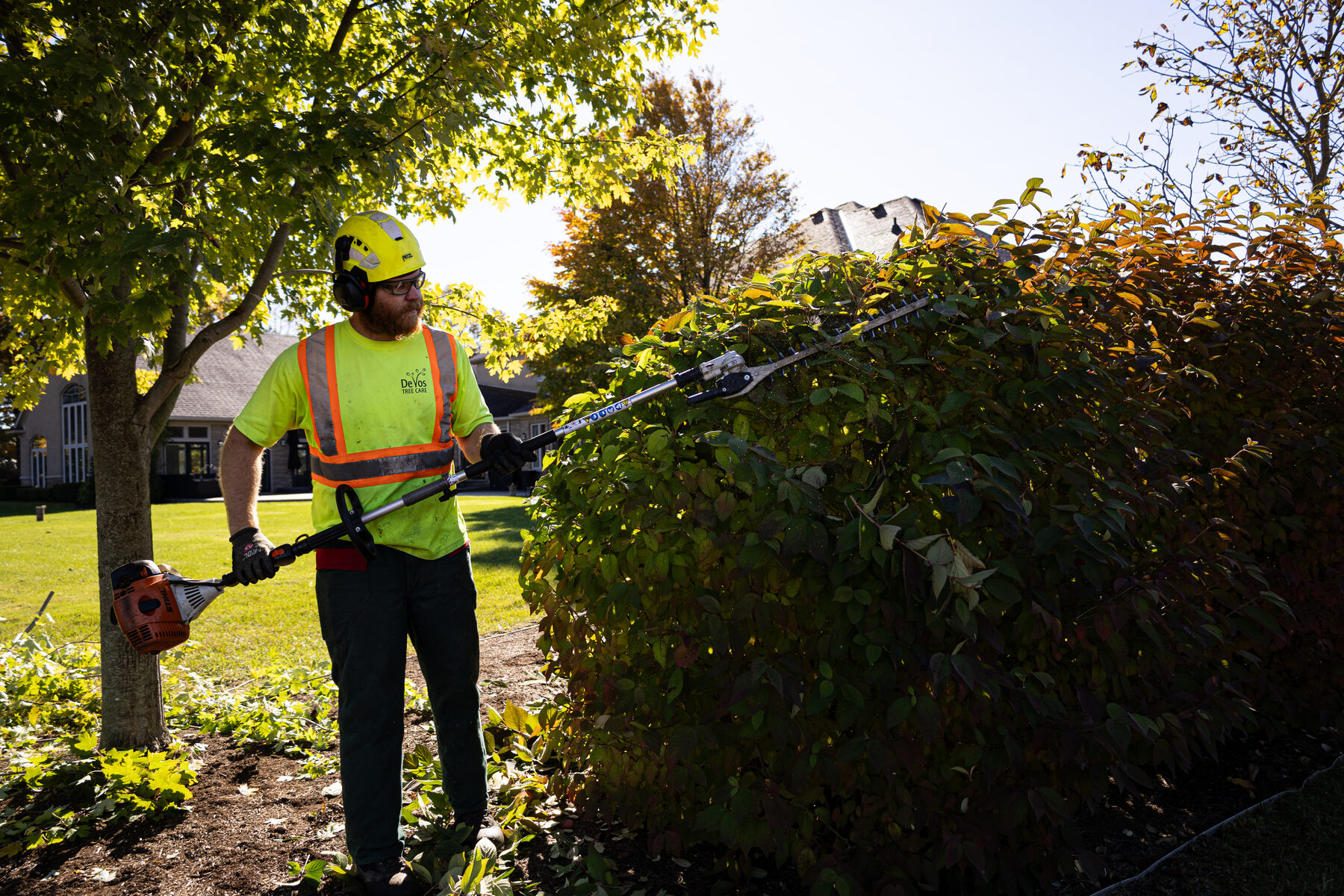
“Whenever it needs it” is the honest short answer for a hazardous branch. For everything else, timing genuinely matters — prune at the wrong moment and you can invite disease, stress the tree, or cut off next year’s flowers before they ever open.
The general rule: late winter, while the tree is dormant
For most trees, most of the time, late winter to very early spring — roughly February into March in Ontario, before new growth starts — is the best window. The tree is dormant, so pruning causes less stress; with no leaves in the way, it’s easier to see the tree’s structure and make better cuts; insects and fungal diseases that spread through fresh wounds are far less active in the cold; and the cut has all spring to start closing over as growth resumes. If you’re not sure when to schedule routine pruning and nothing below applies to your tree, this is the default answer.
Oak trees: avoid April through November
Oak wilt is a fatal, fast-spreading disease that has already been confirmed in a small number of Ontario locations, including Niagara Falls and Niagara-on-the-Lake, and it spreads in part through the sap beetles that fresh pruning wounds attract. Ontario’s guidance is to avoid pruning oak trees from April through November — the beetles are far less active once it’s cold, which makes late fall through winter the safer window. If an oak is damaged or needs emergency pruning during the risk months, covering the fresh wound immediately with wound paint or shellac reduces (but doesn’t eliminate) the risk.
Elm trees: avoid April 1 to September 30
Dutch elm disease works the same way — elm bark beetles are drawn to fresh cuts, and they carry the fungus that kills the tree. The Canadian Food Inspection Agency recommends not pruning elm trees anywhere in the country, Ontario included, from April 1 through September 30 each year. A few Prairie provinces have made this a legal ban; Ontario hasn’t, but the biology behind the advice doesn’t stop at a provincial border, so it’s worth following anyway if you have a mature elm worth keeping — there aren’t many left.
Flowering trees: right after they finish blooming
Trees like magnolia, lilac, and flowering crabapple set next year’s flower buds shortly after this year’s blooms fade. Prune them in late winter along with everything else and you’ll cut off next spring’s flowers before they ever open. The fix is simple: prune spring-flowering trees within a few weeks of the flowers dropping, not before.
What to avoid: heavy pruning in fall
Late summer and fall cuts close more slowly heading into winter dormancy, leaving the wound exposed for longer and giving decay and some fungal diseases more of a chance to take hold. A light touch-up is fine; save the real structural pruning for late winter.
The exception to everything above
A cracked, hanging, or storm-damaged limb doesn’t wait for the right season — it gets removed as soon as it’s safe to do so, any month of the year. Everything above is about routine, planned pruning where you actually have a choice of timing. Need it done? Small tree pruning and large tree pruning both have their own guide with typical Ontario pricing, or browse the directory to find a company near you.